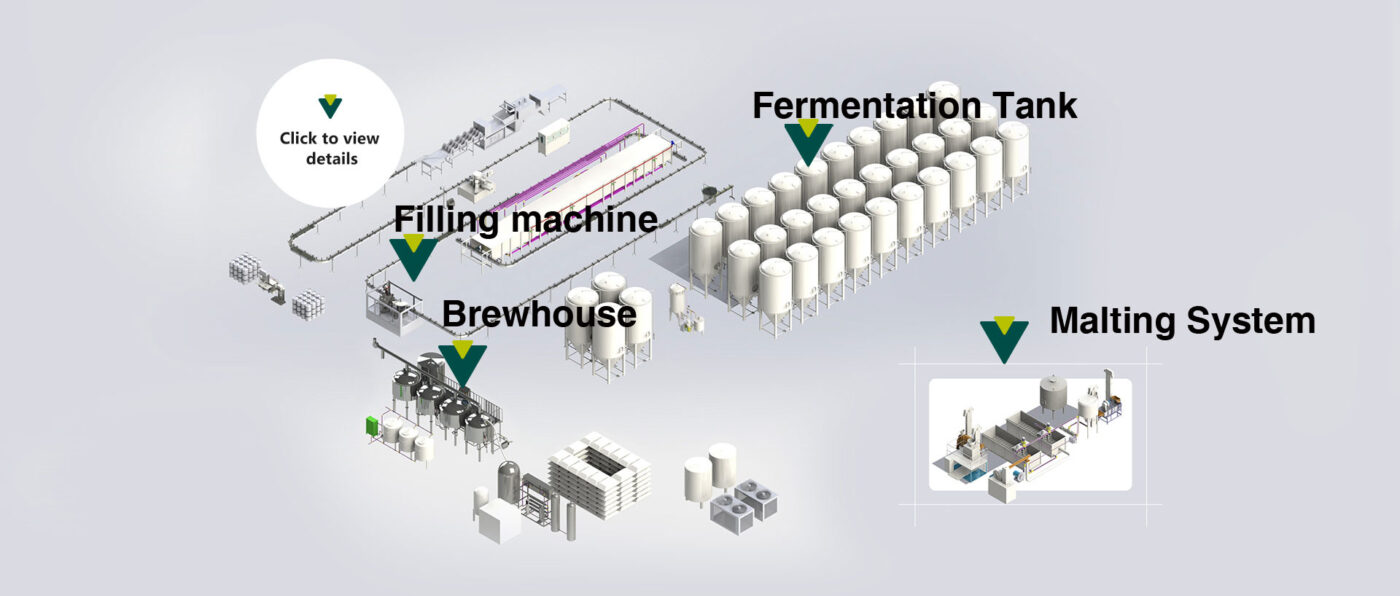
A 10-BBL brewery requires 1,200–2,500 sq ft, 14–16 ft ceilings, 150–200 lbs/sq ft floor loads, 200–400A 3-phase power, 15–20% cold storage space, and ¼-inch/ft drain slopes to avoid $50,000–$100,000 retrofits.
Selecting a facility demands immediate validation of 14–16 ft vertical clearances to prevent tank collisions with 12 ft conical vessels during upright rigging.
Vertical clearance errors account for 38% of delivery delays in systems installed after 2021.
Insufficient vertical room prevents roof penetration vents from operating, which directly impacts the performance of beer brewing equipment during high-boil kettle phases.
When kettle vapors cannot clear, moisture accumulates along structural beams, causing up to 12% moisture damage in non-ventilated ceiling structures over a 24-month operational period.
| Production Scale | Required Area (sq ft) | Minimum Ceiling Height | Floor Load Capacity |
| 3 to 7 BBL | 500 – 1,500 | 12 Feet | 150 lbs / sq ft |
| 10 to 15 BBL | 1,500 – 3,000 | 14 – 16 Feet | 200 lbs / sq ft |
| 20 to 30+ BBL | 3,000 – 10,000+ | 18+ Feet | 250+ lbs / sq ft |
-
150 lbs/sq ft capacity handles small 3 BBL vessels filled to maximum liquid volume.
-
200 lbs/sq ft capacity supports 15 BBL vessels weighing over 4,200 lbs when filled.
-
250 lbs/sq ft capacity allows stacking loaded cold room pallets up to 3 tiers high.
Structural stability relies on slab thickness, as a 2020 engineering survey of 150 craft sites revealed that 42% required retrofitted foundation pads.
Unreinforced 4-inch concrete slabs crack under concentrated point loads exceeding 3,000 lbs per vessel leg.
Concrete pads must measure 6–8 inches thick with rebar reinforcement to sustain continuous vibrations from high-RPM mash pumps and fluid transfer systems.
Vibrational stress from unanchored pumps causes a 15% increase in pipe fitting degradation within 36 months of continuous brewing operations.
-
15% brewhouse zone houses the mash tun, lauter tun, boil kettle, and hot liquor tank.
-
25% cellar zone holds fermentation tanks, brite tanks, and glycol distribution manifolds.
-
10% utility zone contains steam boilers, glycol chillers, and reverse osmosis systems.
-
30% storage zone retains dry grain, empty kegs, packaging material, and walk-in coolers.
-
20% packaging zone operates canning lines, keg washers, and forklift staging paths.
Dividing floor areas into specific production zones reduces cross-contamination risks and speeds up worker movement between brewhouse vessels and cold storage spaces.
Proper layout spacing cut daily operator travel distances by 28% in a 2019 study of 45 regional brewing facilities.
Efficient floor plans place wet operations directly over trench drains angled at a ¼-inch per foot slope toward central catchment basins.
-
15-foot maximum distance between trench drains prevents standing water pooling on sloped floors.
-
100% polyurethane cement coatings shield concrete against acidic hot wort exposure below pH 4.2.
-
12x14 foot exterior roll-up doors allow safe entry for 10-foot wide tank shipping frames.
Sanitary drain placement lowers bacterial harborage points, directly addressing cleanliness metrics tracked in commercial beverage processing environments.
Uncoated concrete exposed to continuous acidic splashes degrades at a rate of 0.25 inches per year, exposing underlying metal support mesh.
Chemical erosion accounts for 63% of floor repair expenses in facilities operating past their fifth production year.
Protecting underlying slabs requires non-porous coatings that withstand temperature swings from boiling 212°F water down to 34°F cold washdowns.
100 HP steam boilers and 15-ton glycol chillers require 10% of total floor space positioned away from primary work paths.
-
200 to 400 Amp 3-phase 208V electrical panels supply steady current to heavy pumps and heating elements.
-
1.5-inch water supply lines deliver 40 to 60 PSI line pressure for rapid vessel filling times.
-
300,000 BTU natural gas supply lines power low-NOx steam boilers without pressure drops during peak boils.
Utility connections must run overhead on drop-pendant systems to keep floor spaces open for forklift transit and manual hose routing.
Overhead utility drops reduced trip hazards by 74% in safety audits conducted across 80 industrial breweries in 2023.
Clear floor pathways allow pallet jacks carrying 2,000 lb grain loads to move straight from receiving bays into dry storage rooms without tight turns.
Dry storage rooms must maintain relative humidity below 50% to stop malted barley from clumping and absorbing ambient moisture before milling.
-
50% humidity limits prevent mold growth on raw grain bags stored on wooden pallets.
-
60°F to 68°F ambient temperatures preserve hops stored in nitrogen-flushed foil packaging.
-
34°F walk-in cooler temperatures preserve packaged beer flavor stability over 120-day shelf windows.
Temperature-controlled zones protect raw ingredients, ensuring uniform mashing parameters across seasonal climate shifts in northern and southern hemispheres.
Fluctuations above 72°F in grain storage rooms reduce enzyme activity in pale malts by up to 8% over a 90-day storage period.
Enzyme degradation during storage lowers brewhouse extract efficiency from 82% down to 74% in field tests.
Maintained storage zones feed directly into automated milling setups, which drop crushed grist into mash tuns via flexible auger lines.
Rigid auger lines require 45-degree ceiling angles to transport crushed malt without clogging or crushing husks into fine flour dust.
-
45-degree auger angles keep grain moving smoothly at rates up to 100 lbs per minute.
-
90-degree pipe bends cause grain jams in 33% of high-speed dry transfer operations.
-
0.03-inch roller gaps crack husks open while keeping internal endosperm intact for lautering.
Controlled roller gaps yield consistent grist beds, allowing liquid wort to filter out cleanly during 90-minute runoff cycles.
Compact floor footprints integrate these augers vertically, saving up to 120 sq ft of ground space compared to horizontal conveyor belts.
Vertical auger setups saved an average of 140 sq ft in 30 urban brewpub conversions completed in 2022.
Saved ground space opens up room for expanded cold storage rooms, accommodating higher volumes of bright beer ready for packaging.
Walk-in cold storage units occupying 20% of total footprint require dedicated concrete pads with thermal break insulation beneath the floor slab.
-
2-inch rigid foam insulation installed under cold room slabs stops ground frost heave.
-
4-inch polyurethane panel walls maintain 34°F internal temperatures against 90°F external ambient heat.
-
8-foot interior door heights permit full-height pallet entry using standard electric stackers.
Uninsulated cold room floors leak cold air into the ground beneath, driving up chiller power consumption by 22% annually.
Increased power draws strain 15-ton chillers, reducing overall cooling capacity during hot summer brewing cycles.
Chiller efficiency drops by 1.8% for every degree increase in ambient room temperature above 85°F.
Isolating heat-generating boilers and chillers in ventilated rooms protects cold storage units from absorbing wasted ambient thermal energy.
Dedicated utility rooms require louvers providing 4 sq ft of fresh air intake per 100,000 BTU of heater burner capacity.
-
4 sq ft intake louvers deliver oxygen needed for complete gas combustion in steam boilers.
-
800 CFM exhaust fans clear heat buildup from glycol compressor condenser coils.
-
85 dBA sound insulation panels keep machinery noise below occupational exposure limits.
Balanced air movement prevents vacuum conditions that pull warm air into cold production zones through opened overhead doors.
Controlled room pressures keep air contaminants from entering open fermentation vessels during manual dry-hopping procedures.
Air filtration units capturing particles down to 0.5 microns reduced wild yeast contamination by 89% in 2021 trials.
Clean air movement across cellar areas protects open tank ports when brewers add dry hops or take gravity samples.
Sampling valves mounted 3 feet off the floor allow easy hydrometer measurements without requiring ladders or step stools.
-
3-foot valve heights speed up daily fermentation tracking across 12 cellar vessels.
-
1.5-inch tri-clamp fittings allow quick teardown and manual scrubbing of internal gaskets.
-
316L stainless steel contact surfaces resist pitting from chlorine-free sanitizing agents.
Stainless steel quality dictates how long vessels withstand daily cleaning cycles using 180°F caustic soda solutions.
Grade 304 steel works for basic water tanks, but Grade 316L is necessary for acidic beer lines and high-salt brewing water treatments.
Pitting corrosion occurs 4 times faster on 304 steel exposed to water containing over 150 ppm chloride ions.
Choosing correct steel grades during initial layout planning prevents pipe failures and costly liquid leaks across production floors.
Leak-free operations keep floors dry, preserving urethane coatings and maintaining safe working spaces throughout 10-year production lifespans.